MOT cost .

Hyundai

I10

373,526 MOT tests analysed. lands in the middle of the pack — here's where I10s pass, fail, and end up on the retest sheet.

That's 1.0 points below the UK fleet average across our 1,984 tracked models — buyers should expect more first-time fails than the typical UK car.

Pass

76.5%

Pass-after-fix

5.5%

Fail

17.5%

Avg miles

50,907

Pass + Pass-after-fix + Fail = 100%

Performance by cohort

3 year bands · 373,526 tests

Pass rate climbs 10.6 points across the cohorts — newer I10 examples clear the test more reliably than the early cars.

Pre-2018 cohort 324,775

Pass

75.3%

Fail

18.6%

PRS

5.6%

Avg mileage at test

54,333 mi

2018–2020 cohort 48,502

Pass

84.5%

Fail

10.5%

PRS

4.6%

Avg mileage at test

28,158 mi

2021+ cohort 249

Pass

85.9%

Fail

8.8%

PRS

5.2%

Avg mileage at test

19,271 mi

Cohort = vehicle's first-registration year band. Same model, different generations of build.
Generations on file · 3

Hyundai I10 · UK market

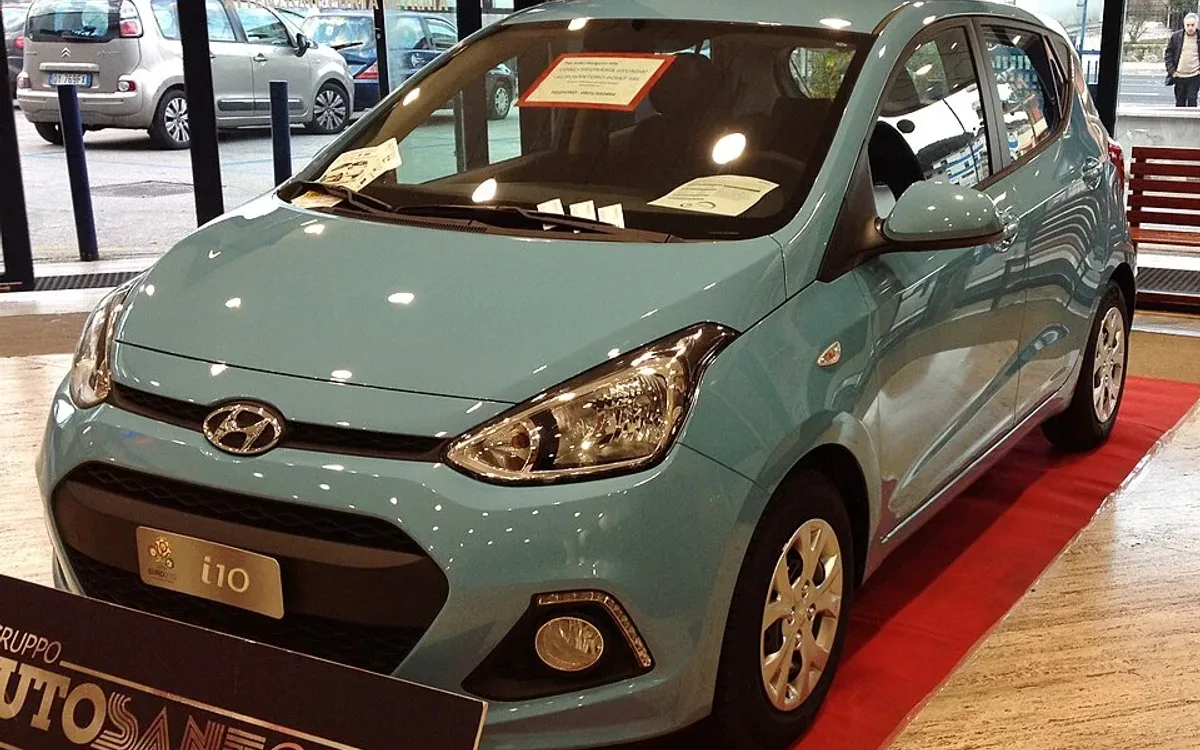
Hyundai I10 2007-2013

20072013

Hyundai I10 2013-2019

20132019

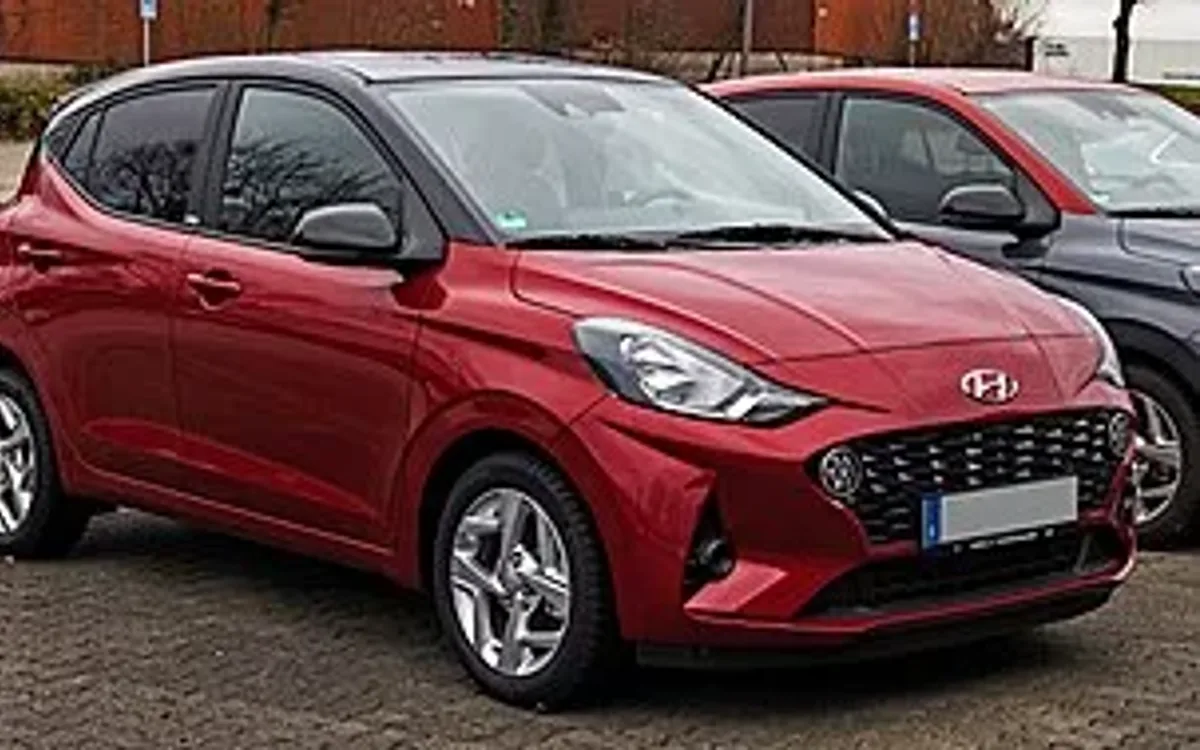
Hyundai I10 2019-now

2019now

Photos: Wikimedia Commons · CC BY-SA / CC BY / public domain.

The picture

City car standout — 77.56% pass rate at 46k miles

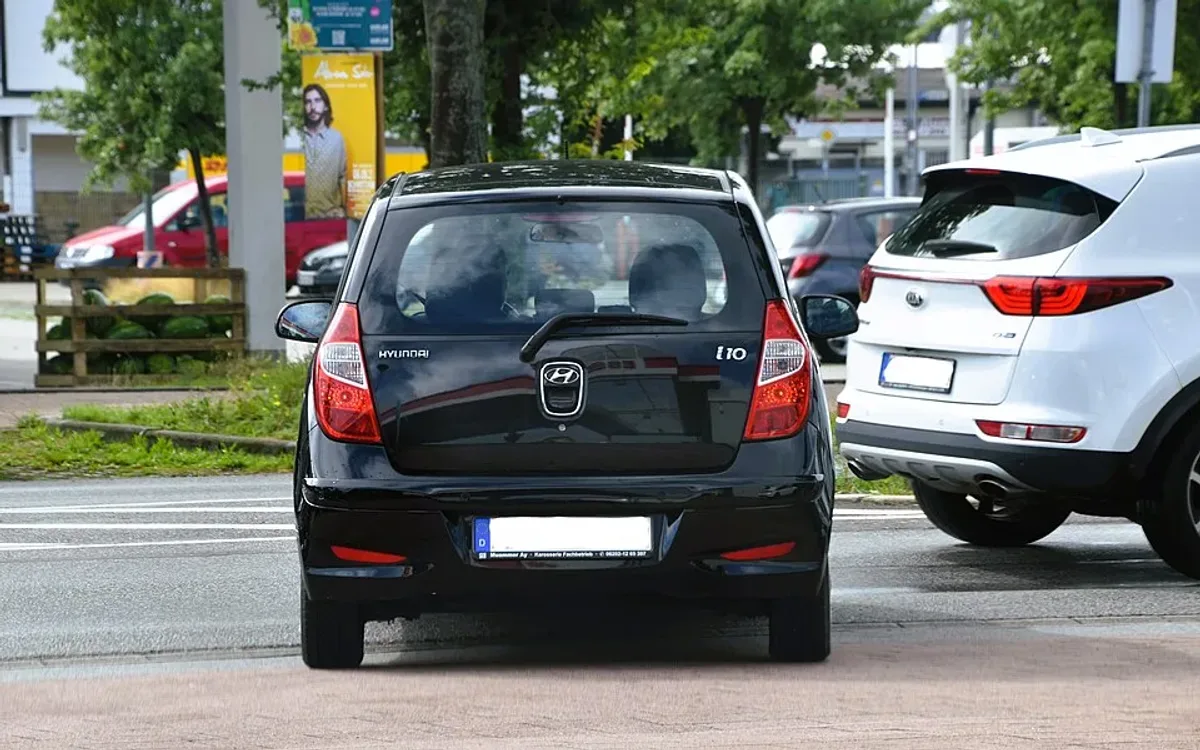
At an average presenting mileage of just 46,733 — lowest in its class — the Hyundai i10 manages a 77.56% pass rate across 282,023 tests. Top failure is a rear number plate lamp, which is both cheap to fix and entirely avoidable if owners check it before booking the MOT. Wiper blades and tyre tread depth round out the top three: a list that reads more like a pre-MOT checklist than an engineering problem.

Owner reports do flag more serious faults. A crankshaft pulley shearing at 75,000 miles — two months outside the five-year warranty — cost one owner a dealer quote of £1,000. Dashboard rattles in 2019 models were traced to a loose wiring connector block, easily resolved. On balance, the i10 is one of the more straightforward city cars at MOT time. Fix the lamp, swap the blades, check the tread — and it should pass without incident.

ABI Insurance Group

Group 2–9

A low-group car — among the cheapest to insure in the UK. Lower groups cost less to insure; UK fleet average is around Group 22.

Source: ABI Group Rating Panel · administered by Thatcham Research · groups cover standard variants; performance trims may sit higher. Browse all insurance groups →

2–9

out of 50

Compare quotes →

Top ten reasons for rejection.

Filter failures:

  1. 01

    A rear registration plate lamp or light source missing or inoperative in the case of multiple lamps or light sources

    9,230 occurrences · 2.5% of tests

  2. 02

    Wiper blade missing or obviously not clearing the windscreen

    6,992 occurrences · 1.9% of tests

  3. 03

    A lamp missing, inoperative or in the case of a multiple light source more than 1/2 not functioning

    6,826 occurrences · 1.8% of tests

  4. 04

    Tyre tread depth not in accordance with the requirements

    6,325 occurrences · 1.7% of tests

  5. 05

    A suspension joint dust cover severely deteriorated

    6,324 occurrences · 1.7% of tests

  6. 06

    Wiper blade defective

    5,767 occurrences · 1.5% of tests

  7. 07

    a brake lining or pad worn below 1.5mm

    5,273 occurrences · 1.4% of tests

  8. 08

    A suspension joint dust cover missing or no longer prevents the ingress of dirt etc

    5,047 occurrences · 1.4% of tests

  9. 09

    Brake pipe damaged or excessively corroded

    5,046 occurrences · 1.4% of tests

  10. 10

    Windscreen or window damaged or seriously discoloured but not adversely affecting driver's view

    5,001 occurrences · 1.3% of tests

Counts cover Major and Dangerous defects logged at test. Advisory items excluded so this shows why a car was rejected, not just what the tester flagged in passing.

Worst-case fix budget · top 4 failures

£168£415

If every one of this I10's most-logged Major fails hit at the same MOT, that's the real-world UK garage range. Reality is usually one or two items, not all of them. Open the estimator →

Try the calculator

Build your own retest budget.

Year-band analysis

Best year to buy. Worst to avoid.

First-time MOT pass rate split by registration band. A 10.6-point gap between bands means the year you buy Hyundai I10 has a real effect on what turns up at the garage.

Best band to buy

85.9%

2021+ registration

the 2021-on band climbs to 85.9% — a 10.6-point improvement. Tests in this band average 19,271 miles — roughly 35K miles fewer on the clock than the older band. Failures here are mostly wear items: does not clear the windscreen effectively, gaiter missing or no longer prevents the… — the structural issues that drag down older examples don't appear in the top-10 for this band. Post-2020 examples are early in their MOT life and generally show the cleanest records.

Band to be cautious about

75.3%

Pre-2018 registration

On the older band (pre-2018), the data shows a 75.3% pass rate against a fleet average of 85.9% on the newer band. The main culprits logged at test: inoperative in the case of multiple lamps…, not working, and ball joint dust cover severely deteriorated. Average mileage on test for this band is 54,333 miles — high-mileage wear items are a recurring theme. Honest John records: "Report of 2016/66 Hyundai i10 needing new rear discs and pads at cost of £322 due to pitting with corrosion. Also a/c needs a re-gas."

Best band to buy: 2021+ (85.9% first-time pass). Worst band to avoid: pre-2018 (75.3% pass). That's a 10.6-point spread across 324,775 older tests and 249 newer ones — year of build makes a material difference on this model.

Year-spread leaderboard →

Tools that pre-empt a retest.

Picked against this car's top failure patterns. Affiliate links to Amazon UK — we earn a small cut at no cost to you. Disclosed up-front, doesn't shape the data.

My Motor World · affiliate

Parts & supplies for this fix

Affiliate links — small commission, no extra cost to you.

Click Mechanic · affiliate

Book a mobile mechanic

Affiliate links — small commission, no extra cost to you.

Mobile mechanic · UK-wide

Book a mechanic at your door.

Fixed-price quotes upfront. No garage needed. Click Mechanic sends a vetted local mechanic to you — home, work, or roadside.

Get a quote →

Owner reports · Honest John

What owners actually report.

Verbatim faults logged by owners on honestjohn.co.uk over recent years. We didn't summarise — these are the words people typed in.

What's good

A brilliant executed city car that offers superb value for money, the Hyundai i10 can easily mix it with the Toyota Aygo and Volkswagen Up.

Recent owner-reported faults

  1. 6 Jan 2020

    Another rattle reported behind the dash of a 2019 Hyundai i10, probably for the same reason as the KIA Picanto (above).

  2. 1 Jan 2020

    Rattle in front passenger area of new KIA Picanto 1 spec, found to come from loose unused wiring connection block banging against a body part. Easily fixed by straightening and moving the wiring and block.

  3. 5 Nov 2019

    Report of 2014 Hyundai i10 1.2 shearing off its crankshaft pulley, throwing its alternator belt and losing most of its oil. Always dealer serviced. 75k miles and 2 months out of 5 year warranty. Dealer wants £1,000 to fix. Owener had car towed to his regular Hyundai dealer in Reading. They spoke to Hyundai who gave him 10%, and they added another 10% and replaced the pulley plus crankshaft oil seal, bolt and belt, so the bill was £383. Owner also spoke to the Hyundai dealer it got towed to in Slough who offered him the £90 inspection fee back. The bolt had sheared off the crankshaft sprocket that holds the pulley on and the belt fell off, similar to what used to happen to the previous generation i10.

  4. 8 Oct 2019

    Report of rusted rear brake discs on 2017 Hyundai i10.

  5. 6 Jul 2019

    Report of intermittent "disturbing noises" from engine of 2015 Hyundai i10 1.25 automatic when taking right hand bends. Owner left car with dealer for testing while on holiday and dealer found failed oil riser that meant the engine was not being lubricated correctly. New engine fitted under warranty.

  6. 9 Jun 2019

    Report of parking brake of October 2017 Hyundai i10 Premium SE failing after being parked on a slightly sloping drive. What happened was that the parking brake cable simply snapped under tension.

  7. 18 Mar 2019

    Report of leaking bulkhead seal of March 2018 Hyundai i10 Premium SE Auto. First noticed January 2019. Hyundai dealer took 20 days to repair it. Now leak has returned.

  8. 9 Aug 2018

    Report of 2016/66 Hyundai i10 needing new rear discs and pads at cost of £322 due to pitting with corrosion. Also a/c needs a re-gas.

  9. 17 Jul 2018

    Report of 13,000 mile 2015 Hyundai i10 1.2 Premium automatic slipping out of 4th gear at 2,000rpm. Dealer atttempted to re-set the sensor but problem still occurs. Does not happen at 2,500rpm where it settles into 4th.

  10. 19 Jun 2018

    Report of clutch failure on 2014 Hyundai i10 at 13,000 miles.

  11. 14 May 2018

    Report of surface rust on rear brake discs of 2016 Hyundai i10 found by the dealer during its 2nd service at just 5,000 miles. Dealer offered to clean them up for £287, which implies re-surfacing the discs on a special machine.

  12. 8 May 2018

    Report of a 2 year old Hyundai i10 needing replacement rear pads at 6,628 miles at a cost of £276.10 (pads or discs and pads?) and also needing the front brakes stripping and cleaning.

Source: honestjohn.co.uk · 25 reports indexed, top 12 shown

Recall history

4 UK recalls on record.

The I10 has 4 official UK vehicle recalls covering defect details, remedies, and affected build dates.

See all recalls

Buying or keeping an I10?

Use the failure ranking as a pre-test checklist or a haggling lever. Treat the headline pass rate as a fleet-wide trend, not a guarantee on any individual car.

If you own an I10 and your last MOT looked nothing like the ranked failures above, that's normal — individual cars vary widely. The ranking shows the patterns testers flag most often across the country.