MOT cost .

DS

Ds3

64,148 MOT tests analysed. lands in the middle of the pack — here's where Ds3s pass, fail, and end up on the retest sheet.

That's 1.8 points below the UK fleet average across our 1,984 tracked models — buyers should expect more first-time fails than the typical UK car.

Pass

75.7%

Pass-after-fix

5.4%

Fail

18.4%

Avg miles

51,636

Pass + Pass-after-fix + Fail = 100%

ULEZ compliant

Petrol cars first registered from January 2006 meet Euro 4 — compliant in London ULEZ, Birmingham CAZ, Bristol CAZ, and Glasgow LEZ.

UK ULEZ & CAZ guide →

Performance by cohort

3 year bands · 64,148 tests

Pass rate climbs 10.8 points across the cohorts — newer Ds3 examples clear the test more reliably than the early cars.

Pre-2018 cohort 53,460

Pass

74.0%

Fail

19.8%

PRS

5.8%

Avg mileage at test

55,352 mi

2018–2020 cohort 9,483

Pass

84.1%

Fail

11.7%

PRS

3.5%

Avg mileage at test

33,934 mi

2021+ cohort 1,205

Pass

84.8%

Fail

11.2%

PRS

3.2%

Avg mileage at test

25,676 mi

Cohort = vehicle's first-registration year band. Same model, different generations of build.

The picture

DS 3 at 74.9%: fractured springs and plate lamps drive a below-average result

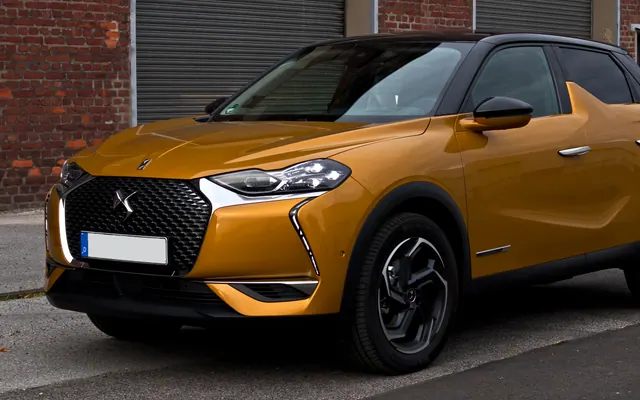
The DS 3 (badged as DS from 2015, previously Citroën DS3) posts 74.9% first-time pass from 40,211 tests at an average presenting mileage of 68,321. Top failures are fractured springs, rear plate lamp faults and CV joint boot deterioration. The DS 3 sits on the same PF1 platform as the Citroën DS3, with the same spring cracking tendency at the lower coil. At 74.9% and below fleet average, the DS 3 needs pre-test spring and plate lamp inspection. The lower failure rate compared to the Citroën DS3 data reflects the younger average mileage of the DS-badged fleet, which dates from 2015 onwards.

ABI Insurance Group

Group 18–38

Above average — worth comparing quotes before buying. Lower groups cost less to insure; UK fleet average is around Group 22.

Source: ABI Group Rating Panel · administered by Thatcham Research · groups cover standard variants; performance trims may sit higher. Browse all insurance groups →

18–38

out of 50

Compare quotes →

Top ten reasons for rejection.

Filter failures:

  1. 01

    A transmission shaft constant velocity joint boot missing or no longer prevents the ingress of dirt etc

    2,683 occurrences · 4.2% of tests

  2. 02

    A spring or spring component fractured or seriously weakened

    1,899 occurrences · 3.0% of tests

  3. 03

    Tyre tread depth not in accordance with the requirements

    1,356 occurrences · 2.1% of tests

  4. 04

    Wiper blade missing or obviously not clearing the windscreen

    1,120 occurrences · 1.7% of tests

  5. 05

    A rear registration plate lamp or light source missing or inoperative in the case of multiple lamps or light sources

    1,109 occurrences · 1.7% of tests

  6. 06

    A transmission shaft constant velocity joint boot severely deteriorated

    887 occurrences · 1.4% of tests

  7. 07

    A lamp missing, inoperative or in the case of a multiple light source more than 1/2 not functioning

    881 occurrences · 1.4% of tests

  8. 08

    a brake lining or pad worn below 1.5mm

    840 occurrences · 1.3% of tests

  9. 09

    Brake disc or drum significantly and obviously worn

    816 occurrences · 1.3% of tests

  10. 10

    A steering ball joint with excessive wear or free play

    800 occurrences · 1.2% of tests

Counts cover Major and Dangerous defects logged at test. Advisory items excluded so this shows why a car was rejected, not just what the tester flagged in passing.

Worst-case fix budget · top 4 failures

£168£415

If every one of this Ds3's most-logged Major fails hit at the same MOT, that's the real-world UK garage range. Reality is usually one or two items, not all of them. Open the estimator →

Try the calculator

Build your own retest budget.

Year-band analysis

Best year to buy. Worst to avoid.

First-time MOT pass rate split by registration band. A 10.8-point gap between bands means the year you buy DS Ds3 has a real effect on what turns up at the garage.

Best band to buy

84.8%

2021+ registration

the 2021-on band climbs to 84.8% — a 10.8-point improvement. Tests in this band average 25,676 miles — roughly 30K miles fewer on the clock than the older band. Failures here are mostly wear items: does not clear the windscreen effectively, blade defective — the structural issues that drag down older examples don't appear in the top-10 for this band. Post-2020 examples are early in their MOT life and generally show the cleanest records.

Band to be cautious about

74.0%

Pre-2018 registration

On the older band (pre-2018), the data shows a 74.0% pass rate against a fleet average of 84.8% on the newer band. The main culprits logged at test: constant velocity boot split or insecure, no…, fractured or broken, and tread depth below requirements of 1.6mm. Average mileage on test for this band is 55,352 miles — high-mileage wear items are a recurring theme.

Best band to buy: 2021+ (84.8% first-time pass). Worst band to avoid: pre-2018 (74.0% pass). That's a 10.8-point spread across 53,460 older tests and 1,205 newer ones — year of build makes a material difference on this model.

Year-spread leaderboard →

Tools that pre-empt a retest.

Picked against this car's top failure patterns. Affiliate links to Amazon UK — we earn a small cut at no cost to you. Disclosed up-front, doesn't shape the data.

My Motor World · affiliate

Parts & supplies for this fix

Affiliate links — small commission, no extra cost to you.

Click Mechanic · affiliate

Book a mobile mechanic

Affiliate links — small commission, no extra cost to you.

Mobile mechanic · UK-wide

Book a mechanic at your door.

Fixed-price quotes upfront. No garage needed. Click Mechanic sends a vetted local mechanic to you — home, work, or roadside.

Get a quote →

Buying or keeping a Ds3?

Use the failure ranking as a pre-test checklist or a haggling lever. Treat the headline pass rate as a fleet-wide trend, not a guarantee on any individual car.

If you own a Ds3 and your last MOT looked nothing like the ranked failures above, that's normal — individual cars vary widely. The ranking shows the patterns testers flag most often across the country.