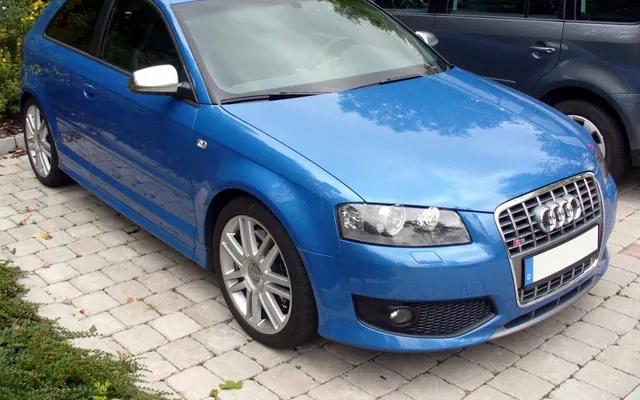
MOT cost .

Audi

S3

8,942 MOT tests analysed. sits above the UK fleet average — here's where S3s pass, fail, and end up on the retest sheet.

That's 6.7 points above the UK fleet average across our 1,984 tracked models — a confident result.

Pass

84.2%

Pass-after-fix

3.2%

Fail

11.8%

Avg miles

93,146

Pass + Pass-after-fix + Fail = 100%

Performance by cohort

2 year bands · 8,936 tests

Pass rate climbs 9.1 points across the cohorts — newer S3 examples clear the test more reliably than the early cars.

Pre-2018 cohort 8,803

Pass

84.1%

Fail

11.9%

PRS

3.2%

Avg mileage at test

93,999 mi

2018–2020 cohort 133

Pass

93.2%

Fail

6.8%

PRS

0.0%

Avg mileage at test

39,217 mi

Cohort = vehicle's first-registration year band. Same model, different generations of build.

The picture

S3: above-average pass rates, with caveats

Across 4,103 MOT tests, the S3 returns 80.1% first-time pass — above the UK fleet average. The single most-logged Major fail is a split CV-joint boot. A number-plate lamp out and a broken or weak spring round out the top three. Average tested mileage sits at 93,487, which is the lens to read those failure rankings through. If you own one and the next test is close, the ranked list below is a sensible pre-test checklist.

ABI Insurance Group

Group 34–42

A high-group car — insurance costs will be significantly above average. Lower groups cost less to insure; UK fleet average is around Group 22.

Source: ABI Group Rating Panel · administered by Thatcham Research · groups cover standard variants; performance trims may sit higher. Browse all insurance groups →

34–42

out of 50

Compare quotes →

Top ten reasons for rejection.

Filter failures:

  1. 01

    Windscreen or window damaged or seriously discoloured but not adversely affecting driver's view

    257 occurrences · 2.9% of tests

  2. 02

    A transmission shaft constant velocity joint boot severely deteriorated

    250 occurrences · 2.8% of tests

  3. 03

    A rear registration plate lamp or light source missing or inoperative in the case of multiple lamps or light sources

    170 occurrences · 1.9% of tests

  4. 04

    A spring or spring component fractured or seriously weakened

    120 occurrences · 1.3% of tests

  5. 05

    Tyre tread depth not in accordance with the requirements

    106 occurrences · 1.2% of tests

  6. 06

    A suspension joint dust cover missing or no longer prevents the ingress of dirt etc

    86 occurrences · 1.0% of tests

  7. 07

    A transmission shaft constant velocity joint boot missing or no longer prevents the ingress of dirt etc

    72 occurrences · 0.8% of tests

  8. 08

    Lambda coefficient outside the default limits or the range specified by the manufacturer

    72 occurrences · 0.8% of tests

  9. 09

    a brake lining or pad worn below 1.5mm

    69 occurrences · 0.8% of tests

  10. 10

    A suspension joint dust cover severely deteriorated

    67 occurrences · 0.7% of tests

Counts cover Major and Dangerous defects logged at test. Advisory items excluded so this shows why a car was rejected, not just what the tester flagged in passing.

Worst-case fix budget · top 3 failures

£148£370

If every one of this S3's most-logged Major fails hit at the same MOT, that's the real-world UK garage range. Reality is usually one or two items, not all of them. Open the estimator →

Try the calculator

Build your own retest budget.

Year-band analysis

Best year to buy. Worst to avoid.

First-time MOT pass rate split by registration band. A 9.1-point gap between bands means the year you buy Audi S3 has a real effect on what turns up at the garage.

Best band to buy

93.2%

2018–2020 registration

the 2018–2020 band climbs to 93.2% — a 9.1-point improvement. Tests in this band average 39,217 miles — roughly 55K miles fewer on the clock than the older band. Failures here are mostly wear items: excessively tinted but not adversely affecting driver's view, carbon monoxide content at idle exceeds manufacturer's… — the structural issues that drag down older examples don't appear in the top-10 for this band. The stricter post-2018 MOT test rules meant manufacturers had to tighten up emissions and electrical checks, but this band still shows far fewer major failures on suspension and bodywork than the older fleet.

Band to be cautious about

84.1%

Pre-2018 registration

On the older band (pre-2018), the data shows a 84.1% pass rate against a fleet average of 93.2% on the newer band. The main culprits logged at test: damaged but not adversely affecting driver's view, constant velocity boot severely deteriorated, and inoperative in the case of multiple lamps…. Average mileage on test for this band is 93,999 miles — high-mileage wear items are a recurring theme.

Best band to buy: 2018-2020 (93.2% first-time pass). Worst band to avoid: pre-2018 (84.1% pass). That's a 9.1-point spread across 8,803 older tests and 133 newer ones — year of build makes a material difference on this model.

Year-spread leaderboard →

Tools that pre-empt a retest.

Picked against this car's top failure patterns. Affiliate links to Amazon UK — we earn a small cut at no cost to you. Disclosed up-front, doesn't shape the data.

My Motor World · affiliate

Parts & supplies for this fix

Affiliate links — small commission, no extra cost to you.

Click Mechanic · affiliate

Book a mobile mechanic

Affiliate links — small commission, no extra cost to you.

Mobile mechanic · UK-wide

Book a mechanic at your door.

Fixed-price quotes upfront. No garage needed. Click Mechanic sends a vetted local mechanic to you — home, work, or roadside.

Get a quote →

Buying or keeping an S3?

Use the failure ranking as a pre-test checklist or a haggling lever. Treat the headline pass rate as a fleet-wide trend, not a guarantee on any individual car.

If you own an S3 and your last MOT looked nothing like the ranked failures above, that's normal — individual cars vary widely. The ranking shows the patterns testers flag most often across the country.