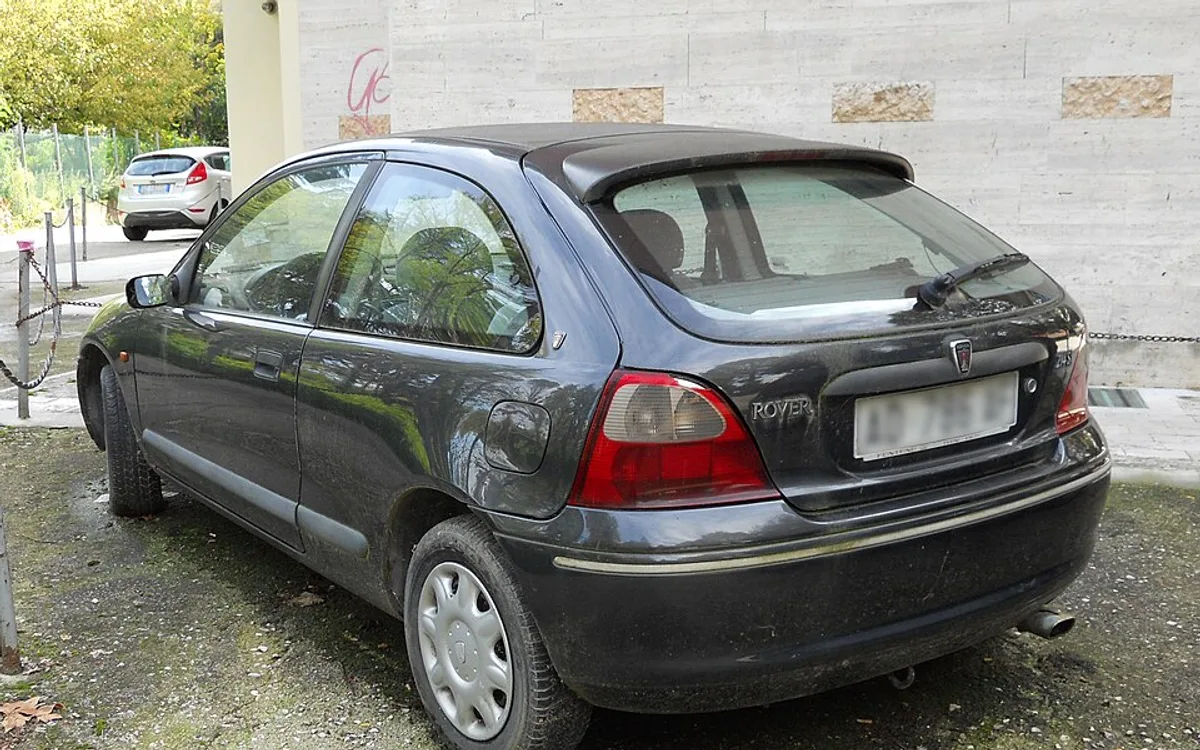

Rover
214
1,899 MOT tests analysed. lands in the middle of the pack — here's where 214s pass, fail, and end up on the retest sheet.
That's 7.4 points below the UK fleet average across our 1,984 tracked models — buyers should expect more first-time fails than the typical UK car.
Pass
70.1%
Pass-after-fix
2.6%
Fail
25.3%
Avg miles
72,990
Pass + Pass-after-fix + Fail = 100%
Petrol cars registered before January 2006 are typically pre-Euro 4 — subject to daily charges in London ULEZ, Birmingham CAZ, and Glasgow LEZ. Bristol CAZ does not charge petrol cars. Daily charges if driven in the zone: London £12.50 · Birmingham £8.00 .
The picture
214: a below-average pass rate worth digging into
Across 931 MOT tests, the 214 returns 69.2% first-time pass — well below the UK fleet average. The single most-logged Major fail is a split CV-joint boot. The strength or continuity of the load bearing and the strength or continuity of the load bearing round out the top three. Average tested mileage sits at 73,966, which is the lens to read those failure rankings through. If you own one and the next test is close, the ranked list below is a sensible pre-test checklist.
Top ten reasons for rejection.
Filter failures:
Hide categories
Tick a category to hide it from rankings sitewide. Saved in this browser only.
- 01
The strength or continuity of the load bearing structure within 30cm of any sub-frame, spring or suspension component mounting (a 'prescribed area') is significantly reduced or inadequately repaired
95 occurrences · 5.0% of tests
- 02
A transmission shaft constant velocity joint boot severely deteriorated
75 occurrences · 3.9% of tests
- 03
Emissions levels exceed the manufacturer's specified limits
58 occurrences · 3.1% of tests
- 04
A transmission shaft constant velocity joint boot missing or no longer prevents the ingress of dirt etc
55 occurrences · 2.9% of tests
- 05
Wiper blade missing or obviously not clearing the windscreen
52 occurrences · 2.7% of tests
- 06
The strength or continuity of the load bearing structure within 30cm of any seat belt anchorage (a 'prescribed area') is significantly reduced or inadequately repaired
51 occurrences · 2.7% of tests
- 07
A rear registration plate lamp or light source missing or inoperative in the case of multiple lamps or light sources
40 occurrences · 2.1% of tests
- 08
Windscreen or window damaged or seriously discoloured but not adversely affecting driver's view
40 occurrences · 2.1% of tests
- 09
Vehicle structure corroded to the extent that the rigidity of the assembly is seriously reduced
38 occurrences · 2.0% of tests
- 10
Emissions levels exceed default limits
36 occurrences · 1.9% of tests
Counts cover Major and Dangerous defects logged at test. Advisory items excluded so this shows why a car was rejected, not just what the tester flagged in passing.
Try the calculator
Build your own retest budget.
Tools that pre-empt a retest.
Picked against this car's top failure patterns. Affiliate links to Amazon UK — we earn a small cut at no cost to you. Disclosed up-front, doesn't shape the data.
My Motor World · affiliate
Parts & supplies for this fix
Affiliate links — small commission, no extra cost to you.

Summit
Summit ADRG-81 Rover Replacement Stick-On Tinted Mirror Glass RHS
£10.99
View at My Motor World →

Summit
Summit ADRG-79 Rover Replacement Stick-On Tinted Mirror Glass RHS
£13.19
View at My Motor World →

Summit
Summit ADRG-80 Rover Replacement Stick-On Tinted Mirror Glass LHS
£13.19
View at My Motor World →

Summit
Summit ADRG-82 Rover Replacement Stick-On Tinted Mirror Glass LHS
£13.19
View at My Motor World →
Click Mechanic · affiliate
Book a mobile mechanic
Affiliate links — small commission, no extra cost to you.
Mobile mechanic · UK-wide
Book a mechanic at your door.
Fixed-price quotes upfront. No garage needed. Click Mechanic sends a vetted local mechanic to you — home, work, or roadside.
Buying or keeping a 214?
Use the failure ranking as a pre-test checklist or a haggling lever. Treat the headline pass rate as a fleet-wide trend, not a guarantee on any individual car.
If you own a 214 and your last MOT looked nothing like the ranked failures above, that's normal — individual cars vary widely. The ranking shows the patterns testers flag most often across the country.