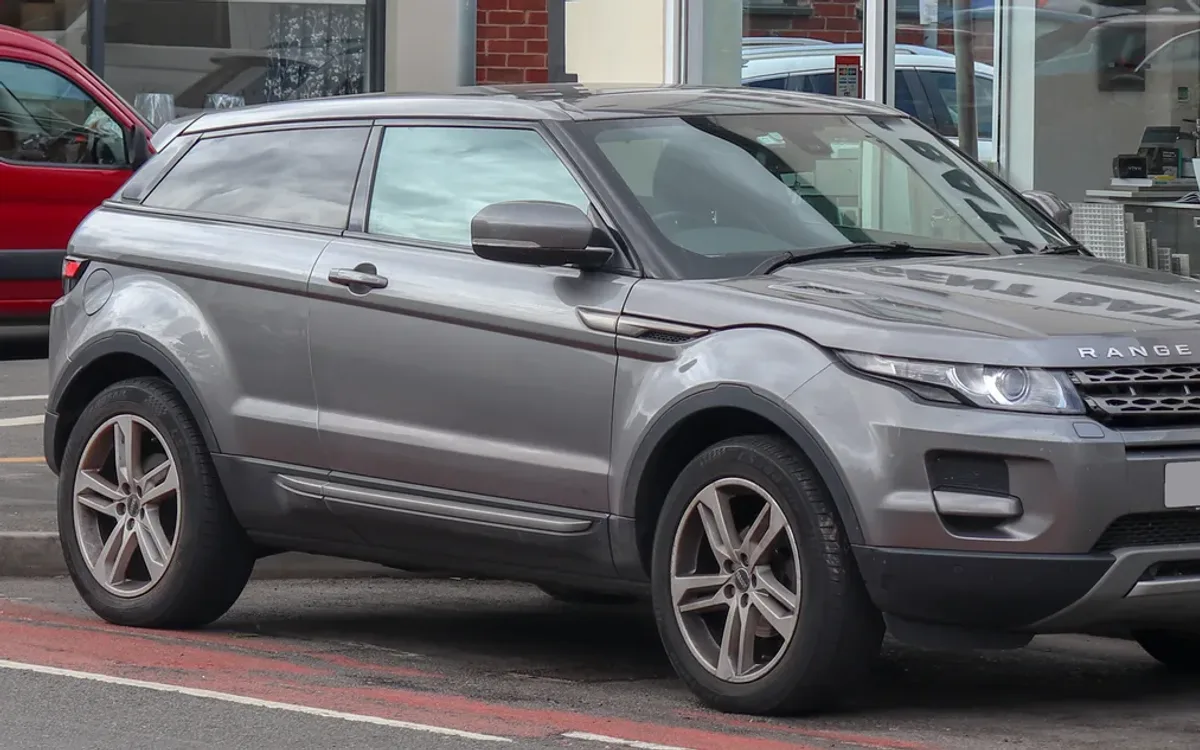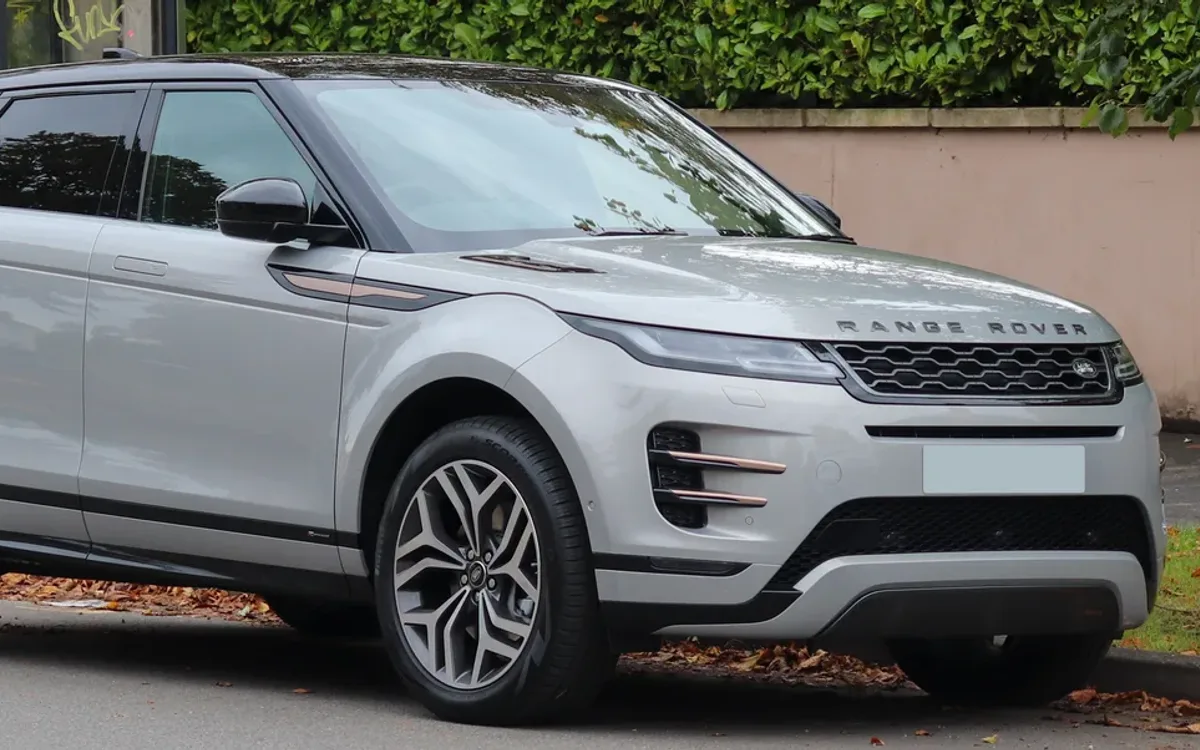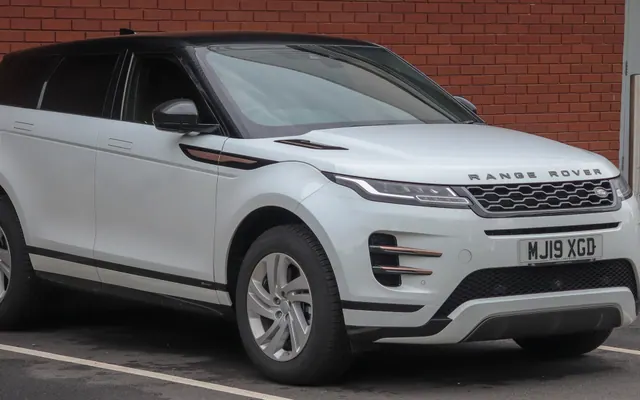
The picture
Evoque's 84.4% Pass Rate Is Misleading at Low Mileage
An 84.4% first-time pass rate from 151,835 tests sounds strong, and at an average of just 66,139 miles it should be — these are relatively young cars. Brake pads worn below 1.5mm, tyre damage, and tread failures lead the failure list, pointing more to owner neglect than mechanical fragility. But the ownership picture is patchier than the MOT numbers suggest. Power steering failure caused by water ingress was reported on a 2020 car, with the fault recurring after initial dealer repair. Windscreen cracks during the 2019-2020 winter led to a months-long wait for replacement glass.
Early oil service indicators appearing at just 3,300 miles on a 2019 D180 caused friction with dealers. Factor in above-average brake and tyre wear rates into the cost of ownership.
Top ten reasons for rejection.
- 01
a brake lining or pad worn below 1.5mm
4,911 occurrences · 3.2% of tests
- 02
Tyre tread depth not in accordance with the requirements
2,961 occurrences · 2.0% of tests
- 03
A tyre seriously damaged
2,439 occurrences · 1.6% of tests
- 04
Windscreen or window damaged or seriously discoloured but not adversely affecting driver's view
2,431 occurrences · 1.6% of tests
- 05
A spring or spring component fractured or seriously weakened
1,982 occurrences · 1.3% of tests
- 06
A headlamp or light source missing, inoperative or more than ½ not functioning in the case of LED
1,746 occurrences · 1.1% of tests
- 07
A tyre cords visible or damaged
1,270 occurrences · 0.8% of tests
- 08
A headlamp or light source missing, inoperative or more than ½ not functioning in the case of LED
1,207 occurrences · 0.8% of tests
- 09
Engine MIL illuminated indicating a malfunction
1,016 occurrences · 0.7% of tests
- 10
Brake disc or drum significantly and obviously worn
973 occurrences · 0.6% of tests
Counts cover Major and Dangerous defects logged at test. Advisory items excluded so this shows why a car was rejected, not just what the tester flagged in passing.
Worst-case fix budget · top 3 failures
£220–£495
If every one of this Range Rover Evoque's most-logged Major fails hit at the same MOT, that's the real-world UK garage range. Reality is usually one or two items, not all of them. Open the estimator →
Try the calculator
Build your own retest budget.
Tools that pre-empt a retest.
Picked against this car's top failure patterns. Affiliate links to Amazon UK — we earn a small cut at no cost to you. Disclosed up-front, doesn't shape the data.
Item 01 · Amazon UK
Brake pad measurement gauge
Testers fail pads under 1.5mm. A wear gauge tells you if you've got two months left or two weeks.
Search Amazon UK
Item 02 · Amazon UK
Digital tyre-tread depth gauge
Five quid for a gauge beats £150 for a retest. UK MOT minimum is 1.6mm — most testers fail anything below 2mm to be safe.
Search Amazon UK
Owner reports · Honest John
What owners actually report.
Verbatim faults logged by owners on honestjohn.co.uk over recent years. We didn't summarise — these are the words people typed in.
Recent owner-reported faults
- 12 Nov 2020
Report of steering problems with Range Rover Evoque purchased in April. In early September the power steering failed. The dealer said the fault was caused by water ingress. Dealer repaired the car but the fault returned and the owner has been offered replacement car of similar age and spec.
- 21 Feb 2020
Report of unavailability of replacement windscreens for latest model Range Rover Evoque. Reader's cracked on 20 December 2019. Still waiting at 21 February 2020.
- 15 Jan 2020
Owner of Evoque 2019 D180 reporting oil service indicator at 3300 miles. Land Rover dealer is unwilling to change the oil free of charge will simply reset the offending warning light.
Source: honestjohn.co.uk · 3 reports indexed
Buying or keeping a Range Rover Evoque?
Use the failure ranking as a pre-test checklist or a haggling lever. Treat the headline pass rate as a fleet-wide trend, not a guarantee on any individual car.
If you own a Range Rover Evoque and your last MOT looked nothing like the ranked failures above, that's normal — individual cars vary widely. The ranking shows the patterns testers flag most often across the country.